

February PES Profile: Black History Month
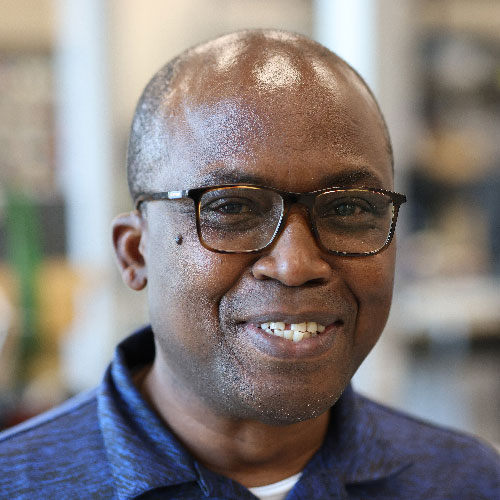
Black History Month is recognized annually throughout February, highlighting the contributions and achievements of African Americans throughout history. IEEE Power & Energy Society (PES) would like to spotlight Emmanuel Agamloh, an IEEE PES member, IEEE Industry Applications Society (IAS) member, and member of the IEEE Fellow Class of 2026, for contributions to electric motor test procedures and efficiency standards. Today, Emmanuel works as an Associate Professor at Baylor University. He has dedicated his career to both advancing research in the power and energy industry and serving as a mentor and voice of support to his students.
Born and raised in a small village in Ghana, Emmanuel had limited access to electricity and found that using resources around him was a useful way to stay busy and get creative. Little did he know that was just the beginning of a long, impactful journey that would lead to where he is today. Emmanuel did not come from an engineering family. He worked at home with his mother and other relatives on the farm lands while his father worked over 70 miles away in the city. At that early age, becoming an electrical engineer was not even a thought. However, as a boy, Emmanuel was very curious. He enjoyed working with his hands and eventually found ways to experiment with power and energy through various self-taught projects using resources from his village, such as kerosene lamps made from cans or making flashlights packed in wooden cases.
Emmanuel emphasized, “I had no idea I was doing anything related to engineering”.
Emmanuel did well in school, completed high school (referred to as secondary school in Ghana), and then attended a prestigious post-secondary institution, called “six form” (following the British system), which was mostly STEM-focused (science, technology, engineering, and mathematics). In Ghana, students who performed well in these particular school systems were generally expected to become medical doctors. While most of his peers entered the medical field, Emmanuel’s success in mathematics led him to pursue engineering. There were many focuses to choose from, and Emmanuel eventually chose to pursue a career in electrical engineering.
“I realized that I was doing so well in mathematics that I had to pursue engineering”. He shared.
After receiving a scholarship, Emmanuel spent his college years studying in Saint Petersburg, Russia, where he met many people with diverse backgrounds. During his time in Europe, he developed a passion for electric machines and power generation. Upon his return to Ghana after completing his Bachelor’s and Master’s, he had the opportunity to work for the Volta River Authority (VRA), a major utility company involved in power generation, transmission, and limited distribution. His boss at the time was an IEEE member. In addition to being given the opportunity to work on various projects, which consisted of designing transmission lines and substations, Emmanuel was exposed to IEEE PES materials, including journals, through his boss and an IEEE PES Fellow, a consultant from Sapienza University of Rome, Professor Francesco Iliceto, who regularly visited VRA at the time and was a well-known engineer for inventing the medium voltage insulated shield wire electricity supply system for rural electrification.
Emmanuel shared, “I had the opportunity to work with him briefly, and he was such an inspiration to me because he was so bold to test his ideas in the field”.
Emmanuel’s passion for working with electric machines grew stronger, prompting him to return to school to pursue his PhD. In 2001, he moved to the United States. He studied under the renowned professor, Dr. Alan Wallace, at Oregon State University (OSU), where he was known for his work in electric machines. Emmanuel had the honor of being his last PhD student before he passed away a few months after graduation. During his time at OSU, Emmanuel worked with Dr. Wallace and Dr. Annette von Jouanne to develop the first OSU prototypes for generating electricity from ocean waves. He was surrounded by great minds, making a difference in the industry. At that point, Emmanuel had been exposed to so many resources from IEEE PES and IAS that he just had to join these societies and engage with peers who shared his passion.
He emphasized, “Immediately after arriving at Oregon State, the main thing that I had on my mind was to join IEEE”.
Further explaining, “IEEE PES to me is the go-to engineering community on electric power and energy. It is an amazing collective resource for engineers working together to make an impact in the field”.
Throughout his career, many of the engineers and mentors Emmanuel has encountered and worked with were members of the IEEE PES or IAS. Reflecting on his affiliation with IEEE as a whole, Emmanuel finds it truly amazing how so many people can come together and contribute so much to the organization and the engineering profession.
“The first time I attended a Standards meeting at a PES conference, I was amazed by the number of people who were part of the working groups and their contributions, passion, and dedication to their work”. He explains.
Emmanuel started reviewing articles for journals after seeing so much review feedback on an article he wrote for PES Letters. He was amazed by how many people commented on his article and impressed by how interested they were in what he had to share. He took this as a learning opportunity. This motivated him, and he went on to become an Associate Editor of 3 IEEE journals, including the Transactions on Energy Conversion, an IEEE PES journal. Emmanuel enjoyed the exposure to fresh ideas in the power and energy space.
Emmanuel received an offer to enter academia right after graduation, but he decided to continue working in the industry in the US. After obtaining his PhD, he continued his strong pull towards electric machines, planning to dedicate the next 2 years to industry and then return to academia, but ended up working in that space for the next 14 years.
He explained, “2 years turned to three, 3 years turned to four, and 4 turned to 5, and then to 14 years. That tells you the kind of impact the industry had on me”.
Emmanuel was fascinated by the challenges of industrial energy efficiency and its importance, so he went to work for a company in Raleigh, North Carolina, called Advanced Energy as a Technical Director of their lab, focusing on motors and energy efficiency. He led efforts to deliver testing and innovative and practical engineering solutions to the technical challenges of different companies, including utilities, manufacturers, and R&D companies within and outside the US. He also advised the US Department of Energy on motor energy efficiency issues.
“The work was so much fun, and I realized the value in helping these companies that I stayed 14 years in that role”.
During this time, Emmanuel also mentored students who were from North Carolina State University as part of their co-op program. Advanced Energy was located on campus, giving Emmanuel access to students each semester for mentorship in his lab. Observing students work to achieve their own professional goals impressed Emmanuel so much that, in that moment, he knew he wanted to return to academia and have a greater impact on aspiring engineers.
Emmanuel expressed, “I was impressed to see how they grew. You have the same student coming in for 3 semesters, and you see the impact you have on their career. You see the difference you are making in their young lives”.
Finally returning to academia, in 2019 Emmanuel accepted an opportunity to serve as an Associate Professor at Baylor University in Waco, Texas. Emmanuel expressed, “It has been amazing so far, working with so many brilliant students and outstanding colleagues…very motivated, passionate, and with a desire to change the world”.
Reflecting on his most recent accomplishment of being elevated to IEEE Fellow, Emmanuel found that being part of the IEEE Fellow Class of 2026 is a humbling experience and that being recognized in this way is a great honor.
He explains, “We are not really doing stuff for accolades. We are just doing it because we are passionate about what we do. If your peers feel like whatever you have done is impactful to society, then that is a great feeling”.
Looking ahead, Emmanuel would love to continue providing his expertise in power and energy and to watch the upcoming generations of engineers achieve their aspirations to become leaders. He would also like to continue his research on developing advanced electric machines and drives for industrial applications and electric vehicle powertrains, superconducting electric machines, and machine diagnostics, using artificial intelligence and machine learning. Emmanuel truly enjoys mentoring students and sees the value in being a constant source of inspiration. He believes that the investment placed in them today will greatly benefit the future.
“In the future, I plan to continue working in the field of energy conversion, and I hope to spend more of my time mentoring students and early-career engineers in the field”.
Emmanuel expressed that there’s always something to learn and to observe. IEEE PES is the place to do just that.
He shares, “I can’t think of any organization that is more authoritative on electric power and energy systems than PES”.